There Is No "Best" Product — Only the Right One for You
The most expensive serum can do nothing for your skin, while a ৳400 moisturizer can transform it. The right product depends on two things: your skin type and your main concern. This guide matches both — in plain language, with the same logic a dermatologist uses.
Step 1: Know Your Skin Type
- Oily — shiny by midday, visible pores, prone to pimples. Very common in Bangladesh's humidity.
- Dry — tight, flaky, rough; little to no shine.
- Combination — oily T-zone (forehead and nose), normal or dry cheeks.
- Sensitive — stings, reddens, or reacts easily to new products.
- Normal — balanced, few problems.
Quick test: wash your face, then wait one hour and put nothing on it. Shiny all over means oily; tight or flaky means dry; shiny only on the nose and forehead means combination.
Step 2: The Three Products Everyone Needs
Before any "active", get these three right — they are the foundation of every routine:
- Cleanser — a gentle face wash, morning and night. Avoid harsh, squeaky-clean soaps; they strip and damage the skin barrier.
- Moisturizer — yes, even oily skin needs it. Use a light gel for oily skin and a richer cream for dry skin.
- Sunscreen, SPF 50+ — every morning, rain or shine. This is the single most effective anti-aging and anti-dark-spot product that exists.
If you only ever buy three products, buy these three.
Step 3: Match an "Active" to Your Concern
"Actives" are the ingredients that treat a specific problem. Choose based on your concern — not the hype:
- Acne and pimples — salicylic acid (BHA) unclogs pores, niacinamide calms oil, and benzoyl peroxide helps stubborn spots.
- Dark spots and uneven tone — vitamin C in the morning, plus niacinamide or alpha arbutin. Be patient: 8–12 weeks.
- Fine lines and aging — retinol (a retinoid) at night, the most proven anti-aging ingredient.
- Dryness and dull, tight skin — hyaluronic acid to pull in water and ceramides to seal the barrier.
- Redness and sensitivity — centella (cica) and panthenol; avoid fragrance and alcohol-heavy products.
- Large pores and oiliness — niacinamide and a gentle BHA.
Step 4: Six Simple Clinical Rules (read before you start)
- Patch-test first. Dab a little on your inner arm for two nights. No reaction means it's safe to use on your face.
- Add one new active at a time. Give it 2–4 weeks before adding another, so you know what works and what reacts.
- Start slow. A new retinol or acid should go on 2–3 nights a week, then build up. Daily from day one usually causes irritation.
- Sunscreen is non-negotiable when using vitamin C, retinol or acids — they make skin more sensitive to the sun.
- Don't pile strong actives together. Retinol plus vitamin C plus an exfoliating acid in one routine damages the barrier. Alternate nights instead.
- Pregnant or breastfeeding? Avoid retinoids and high-strength salicylic acid. Choose azelaic acid, niacinamide, or vitamin C — and check with your doctor first.
When to See a Dermatologist
Skincare products help mild, everyday concerns. See a doctor for painful cystic or nodular acne, melasma that won't fade, sudden rashes, or any reaction that keeps getting worse. Some conditions need prescription treatment — no serum replaces that.
A Word on Authenticity — This Matters More Than the Brand
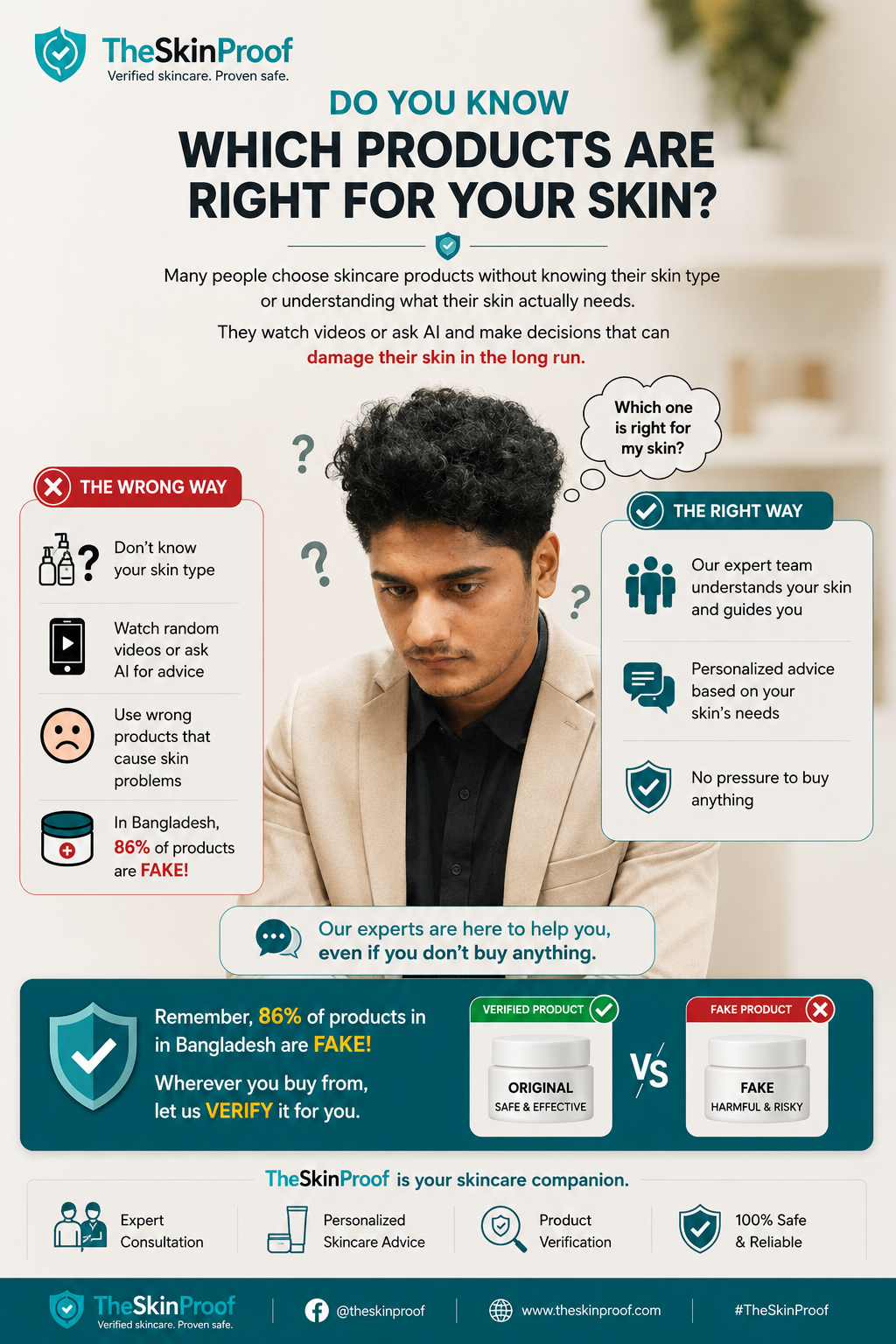
A fake "vitamin C" or "retinol" is usually inert at best, and at worst contains mercury, steroids, or industrial bleach that permanently damage skin. An estimated 86% of skincare sold online in Bangladesh is counterfeit. So the right product only helps if it is real. Buy from invoice-verified sellers, or send us a product on Facebook and we will check it for free.
Still Not Sure? Let Us Help
Take our 60-second skin quiz for a personalised routine, or message The Skin Proof — we will suggest the right products for your skin and budget, and confirm they are authentic. Look after your skin; you only get one.
Shop verified products for this guide
Every item is invoice-verified and batch-checked — 2× money-back if counterfeit.
Before you buy: check authenticity, not price
Don’t chase the cheapest product — look for the authentic one. A cheap fake can damage your skin, and using nothing at all does less harm than using a counterfeit. But a high price doesn’t guarantee authenticity either — people overpay for fakes too. So judge by authenticity, not price.
TheSkinProof offers free authenticity verification. Message our Facebook page with the product and we’ll analyze it and tell you whether it’s real or fake — so it’s important to verify before you buy anything. Or simply buy from TheSkinProof, where every product is already invoice-verified with a 2× money-back guarantee.